Del Mar Photonics -
Newsletter December 2010 -
Newsletter April 2011
Pismo pulse pickers
The
Pismo pulse picker system comprises two main parts – a control and power
supply unit (CPSU) and a Pockels cell with a HV driver.
The CPSU realizes the following functions: synchronization to a femtosecond
pulse train, amplifier pump laser start (flash-lamp or diode pumped with
acoustooptical or electrooptical Q-switch) that is synchronous to the picked
pulses, oscilloscope synchronization, streak-camera synchronization and other
equipment that requires synching to a fs pulse train. The CPSU has 5 independent
delay channels that are rigidly fixed to a fs pulse train (jitter <200 ps). The
delay channels are used for starting Pockels cells, pump lasers and other
equipment. One CPSU can manage up to 4 Pockels cells.
The Pockels cell consists of a HV pulse driver and an electrooptical crystal.
The CPSU supplies necessary voltage to the HV driver (300-500 V, DC) and sends
the start signal. The HV driver produces a bell-shaped HV pulse with duration of
<10 ns at level 10 % from maximum (rise/fall time <4 ns). This pulse is then
supplied to the DKDP electrooptical crystal.
Typical Specifications
Pismo OG11/1 pulse picker system
Pulse picker system with synchronization and control electronics.
Pockels cell crystal: DKDP, 6x6x16 mm3, ARC 700-1000 nm (clear aperture – 5 mm),
other apertures on request
HV pulse amplitude: up to 11 kV (HV pulse has the amplitude ~11kV with duration
10 ns at level 10% of maximum)
Repetition rate: single-shot – 1 kHz
RF source: 30-120 MHz
RF input: optical (internal fiber coupled photodetector with 1.5 m length
plastic fiber)
System transmission: >78%@full range; >85% @ 750-850nm
Contrast ratio: >1:1000
USB control with drivers and software included
Also included:
Two Glan-Taylor calcite air-spaced polarizers with mounts
1.5-meter optical fiber for synchronization
LabView-compatible software
request
a quote - pdf brochure
As the name implies pulse pickers are used to selectively pick off pulses
from the pulse train of a femtosecond or picosecond laser. Pismo pulse picker
models are available as stand-alone devices that use a Pockels cell as an
ultrafast shutter. These pulse pickers allow a wide range of control over the
repetition rate of the pulse train. A single pulse can be selected from the
pulse train at a fixed frequency, increasing the contrast of the signal. All
models include a Pockels cell and synchronization unit, delay generator, and
high voltage driver unit. The pulse picker operation is based on the linear
electro-optic effect (Pockels effect). Pockels cells use an applied electric
field produces a birefringence in the cell that is proportional to the electric
field. The
Pockels cells included with the pulse pickers are made with a Deuterated
Potassium Dihydrogen Phosphate (DKDP) crystal. DKDP is an optical material known
for its wide transparency range and high optical damage threshold.
A pulse picker is used to pick out single optical pulses of picosecond or
femtosecond duration from a sequence of pulses and for controlling femtosecond
multipass and regenerative amplifiers.
Features:
• Single pulse selection from train of pulses
• External RF or optical signal trigger synchronization
• High voltage electrical pulse with adjustable delay
• High voltage electrical pulse with adjustable amplitude
• Two additional delayed pulses for measurement purposes
• Easy installation and alignment
• High efficiency and contrast ratio
• Rugged design
The Pismo control unit provides five output pulses with precise timing delays
that can be synchronized with various signals. Each delay channel consists of a
12 bit digital delay with 50MHz clock frequency and an approximately 40 ns range
of continuous delay. 50 MHz delay oscillator is phase-triggered, so that no one
period jitter occurs. In addition to the five delay channels, the control box
contains two 12-bit frequency dividers with prescalers. All delays have a common
start. The triggering signals for starting the delay can be chosen from two
external inputs (TTL and wide range adjustable) and frequency dividers.
This triggering signal can be synchronized with an optical signal (built-in Si
or InGaAs sensor with fiber-optic input), one of two external sources of RF, an
internal 100MHz crystal or can stay unsynchronized. Delays function in one of
five modes: free running, skipped, enabled, single shot asynchronous and single
shot synchronous. In the free running mode every triggering
pulse causes a delayed output pulse at every channel, except when there is a
frequency overrun. If the time between two triggering pulses is less then
admissible, the second pulse will be ignored. In skipped mode some channels act
every time, and some act only after a skipping signal edge takes place at the
nearest subsequent triggering pulse. Enabled mode is like skipped mode, but
output pulses are present if skipping signal has high level. In the single shot
asynchronous mode delay, output pulses appear at the nearest subsequent to
single shot command triggering pulse. The command can be given from an on-screen
menu, from an external button (optional) or a trough RS-232C interface. Single
shot synchronous mode, in contrast to asynchronous mode, gives output pulses
only after first skipping signal following single shot command. Any delay
channel can be separately turned into both skipped (behavior according to mode)
and unskipped mode (output pulse at every triggering pulse). The control unit
can also produce output pulse bursts with controlled length at every skipping
signal edge or single pulse command. This option is available only in skipped
and single pulse modes.
An electro-optical crystal (DKDP) is placed between two polarizers oriented at a
90° angle to one another. Linearly polarized light passes through the first
polarizer. By applying a high voltage (~ 10 kV) to the electrooptical crystal an
induced birefringence occurs. When the birefringent phase difference reaches /2,
polarization is rotated by 90° and linearly polarized light freely passes
through the second polarizer. When no voltage is applied the polarization does
not rotate and the second polarizer blocks the light.
Almost all of the device settings for the Pismo control unit are controlled with
one knob on the front of the unit. Parameters of interest are selected with the
help of
hierarchical menus, which appears at LCD display. The electro-optic Pockels cell
is driven by high voltage pulses (duration ~ 6 ns at level 10% of maximum)
controlled by the electronics synchronization unit.
Some models of Pismo pulse pickers including prices are shown in our online
store.
|
Pulse Picker |
| |
 Pulse
Picker Pulse
Picker |

|
Model |
Product
Name+ |
Price |
Buy Now |
|
PP-OG10/10 |
Pulse
Picker Pismo OG10/10 |
$21,750.00 |
 |
|
PP-OG5/10 |
Pulse
Picker Pismo OG5/10 |
$15,000.00 |
|
|
PP-OG8-1-A12 |
Pulse
Picker Pismo OG8-1-A12 |
$14,380.00 |
|
|
PP-OG8-1-A15 |
Pulse
Picker Pismo OG8-1-A15 |
$15,460.00 |
|
|
PP-OG8/1 |
Pulse
Picker Pismo OG8/1 |
$15,480.00 |
|
|
PP-OG8/10 |
Pulse
Picker Pismo OG8/10 |
$15,100.00 |
|
|
PP-OG8/100B |
Pulse
Picker Pismo OG8/100B |
$33,420.00 |
|
|
PP-OG8/10B |
Pulse
Picker Pismo OG8/10B |
$18,580.00 |
|
|
PP-OG8/1B |
Pulse
Picker Pismo OG8/1B |
$15,540.00 |
|
|
PP-OG8/25 |
Pulse
Picker Pismo OG8/25 |
$18,720.00 |
|
|
PP-OG8/25B |
Pulse
Picker Pismo OG8/25B |
$22,560.00 |
|
|
PP-OG8/50 |
Pulse
Picker Pismo OG8/50 |
$24,600.00 |
|
|
PP-OG8/50B |
Pulse
Picker Pismo OG8/50B |
$28,730.00 |
|
request
a quote - pdf brochure
Featured products
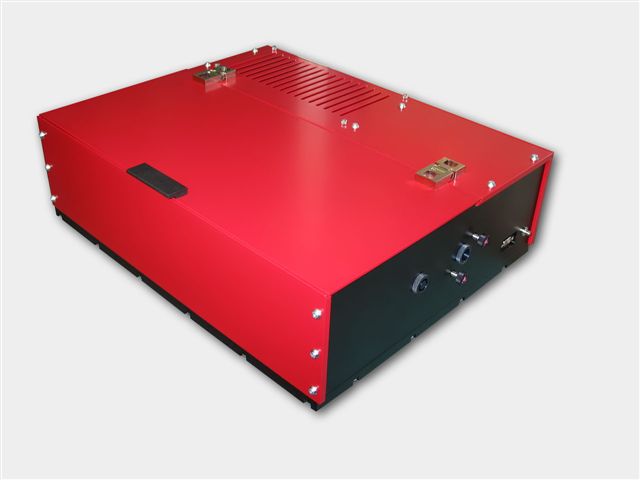 |
Trestles LH Ti:Sapphire
laser
Trestles LH is a new series of high quality femtosecond Ti:Sapphire
lasers for applications in scientific research, biological imaging, life
sciences and precision material processing. Trestles LH includes integrated
sealed, turn-key, cost-effective, diode-pumped
solid-state (DPSS). Trestles LH lasers offer the most attractive pricing
on the market combined with excellent performance and reliability. DPSS LH
is a state-of-the-art laser designed for today’s applications. It combines
superb performance and tremendous value for today’s market and has
numerous advantages over all other DPSS lasers suitable for Ti:Sapphire
pumping. Trestles LH can be customized to fit customer requirements and
budget. Reserve a
spot in our Femtosecond lasers training
workshop in San Diego, California.
|
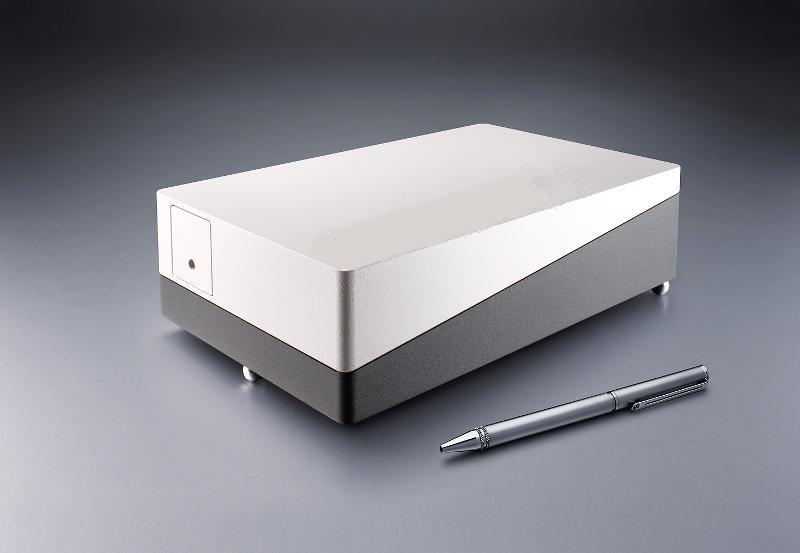 |
DPSS DMPLH lasers
DPSS DMP LH series lasers will pump your Ti:Sapphire laser.
There are LH series lasers installed all over the world pumping all makes & models
of oscillator. Anywhere from CEP-stabilized femtosecond Ti:Sapphire oscillators
to ultra-narrow-linewidth CW Ti:Sapphire oscillators. With up to 10 Watts CW
average power at 532nm in a TEMoo spatial mode, LH series
lasers has quickly proven itself
as the perfect DPSS pump laser for all types of Ti:Sapphire or dye laser.
Ideal for pumping of:
Trestles LH
Ti:Sapphire laser
T&D-scan laser
spectrometer based on narrow line CW Ti:Sapphire laser
|
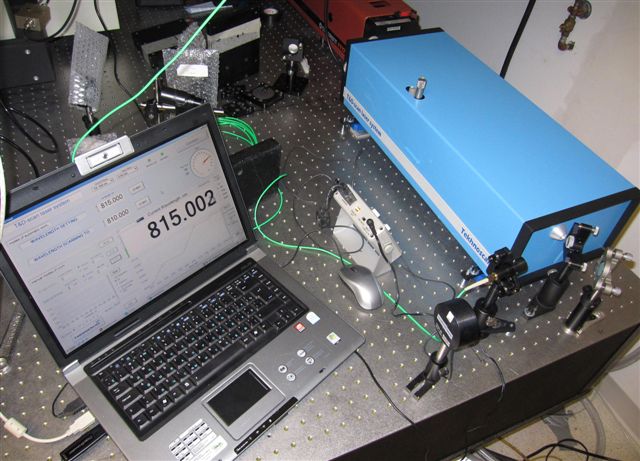 |
New laser spectrometer
T&D-scan for research that
demands high resolution and high spectral
density in UV-VIS-NIR spectral domains - now available with
new pump option!
The
T&D-scan
includes
a CW ultra-wide-tunable narrow-line laser, high-precision wavelength meter,
an electronic control unit driven through USB interface as well as a
software package. Novel advanced design of the fundamental laser component
implements efficient intra-cavity frequency doubling as well as provides a
state-of-the-art combined ultra-wide-tunable Ti:Sapphire & Dye laser
capable of covering together a
super-broad spectral range between 275 and 1100 nm. Wavelength
selection components as well as the position of the non-linear crystal are
precisely tuned by a closed-loop control
system, which incorporates highly accurate wavelength meter.Reserve a
spot in our CW lasers training
workshop in San Diego, California.
|
Del Mar Photonics -
Newsletter December 2010 -
Newsletter April 2011

Del Mar Photonics, Inc.
4119 Twilight Ridge
San Diego, CA 92130
tel: (858) 876-3133
fax: (858) 630-2376
Skype: delmarphotonics
sales@dmphotonics.com